Friday, July 28, 2006

Giant Mine


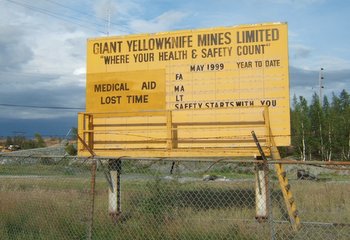
We visited the Giant Mine, defunct since 1999. The Giant Mine has a toxic legacy: 237,000 tonnes of arsenic trioxide dust remains following half a century of mining. Said one of our Yellowknife hosts: Why not solve the problem by getting everyone to return their gold and mix it with the arsenic?

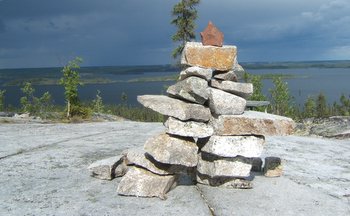
The Giant Mine does not like visitors. Below are some photos taken from the parking lot of the Giant Mine and the unmarked road across the highway. Shortly after taking these images we were approached by security and asked to leave.


Wednesday, July 26, 2006

Prelude Lake

A road winds its way east for 62 km out of Yellowknife. Originally, the Diefenbaker government had proposed building a road all the way around Great Slave Lake. It was part of the Diefenbaker government's program of 'Roads To Resources'.

The road was never completed and now it dead ends at a lake. This road is called the Ingraham Trail and we visited one of the stops along the way, a park called Prelude Lake. The hiking was moderately difficult and the trail includes a very well designed set of interpretive plaques outlining the flora and fauna in the area.


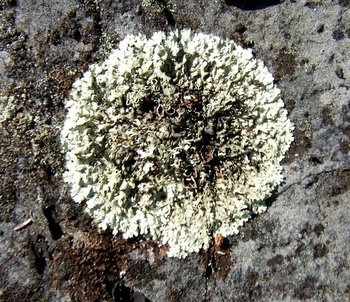
Below is a foliose lichen, a food normally enjoyed only by caribou but also the explorer Sir John Franklin during his hapless 1821 expedition in the Canadian Arctic. The members of his expedition called the lichens Tripe de Roche and even tried to eat their own boots.


We also found this cool flower. Don't know what it is.

Sunday, July 23, 2006

YK Dump


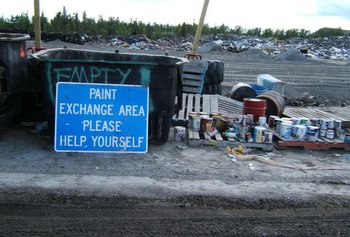
The Yellowknife dump is famous for its scavengers and is known as the "IKEA of dumps." The town's landfill has been featured in The Walrus and the International Herald Tribune. The site is unusual among North American dumps because it allows people to scavenge (although this is not advertised on the city's web site) From 3:30-5pm people can visit to scrounge through boxes left carefully and also not so carefully. We also saw people looking for spare parts for cars, and a helpful sign saying "help yourself to paint".

Scavenging was an eye-opening experience, or shall I say, nostril constricting-experience. As you might expect. Since the town doesn't have green bins like Toronto, the wet rotting garbage is mixed in with the dry, potentially useful garbage. And there are thousands of seagulls crapping everywhere.

Let's just say the reality of scavenging is much less pleasant than the idea of scavenging - reuse of items. I guess you could get used to the smell and the mess, and it would have helped to be properly dressed for scavenging. But it makes you think about all the things we throw away; how un-reusable and unrecyclable so much of our trash is, and how important it is to divert waste into multiple streams: wet waste, compost, recyclables, toxic waste, before it ends up here.

Saturday, July 22, 2006

LOHAS


Conservative newsmagazine Newsweek has a good article on the Greening of America in their recent issue (July 17, 2006)

Gallup polling data shows that the number of Americans who say they worry about the environment has increased from 62 to 77 percent between 2004 and 2006. This data was gathered before the release of Al Gore's film on climate change, An Inconvenient Truth

Marketers have a term called LOHAS (Lifestyles of Health and Sustainability) to describe eco-conscious consumers.

It's good to see the message is sinking in among the conservative media, though the article does peddle a fair share of despair over climate change: "In the face of the coming onslaught of pollutants from a rapidly urbanizing China and India, the task of avoiding ecological disaster may seem hopeless, and some environmental scientists have, quietly, concluded that it is" (p. 43)

Al Gore documents this trend "from denial to despair", in his movie An Inconvenient Truth. Having delayed, denied, obfuscated, and lied about climate change for decades, conservative politicians and media pundits have now completely flip-flopped. Climate change is real and serious, they say, but now it's far too late and too difficult to do anything about it. Whoops, we were wrong. Too bad it's too late.

Friday, July 21, 2006

Lite Ride 2


The Lite Ride from Goods-2-Go has proven to be an invaluable part of our urban vacation. Although not usable for mountain biking or long distance riding, for trips under 20km it is perfect. The unusual appearance of this bike got a lot of people interested.

Alaskan Huskies


Today we visited a professional sled dog racer, Kate Palfrey and her kennel of 54 Alaskan Huskies. Kate and her husband Warren recently competed in the Iditarod, an 1,100 mile sled race in Alaska. Pictured above is a month-old litter of Husky puppies. The dogs are clumsy and curious and you can already see their individual personalities starting to develop. Pictured below: the kennels where the adult teams live.


Thursday, July 20, 2006

Green Issues in the North


Northerners are struggling with a number of political issues this summer

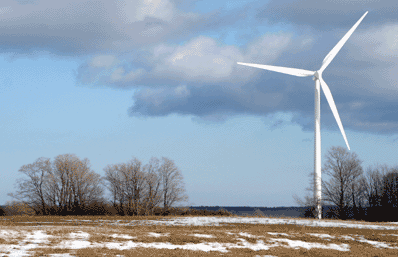
In Yellowknife the Arctic Energy Alliance and Aurora Research Institute have set up a wind monitoring station to determine if wind power is viable for Yellowknife. Although Yellowknife currently uses hydro-electric power generation, many smaller NWT communities get their power from burning nasty diesel fuel.

In Wood Buffalo National Park on the southern border of the NWT, two forest fires are currently burning out of control. In Fort Smith, a plan to conduct a controlled forest burn to protect the town was deep-sixed after residents vigorously opposed it. "It's the oddest friggin' thing I've ever heard of," said Ken Hudson, calling the plan "stupid." (News/North July 17, 2006) Ken Hudson is the president of the Fort Smith Metis Council.

Indeed. I hope that Mr. Hudson won't be looking for government compensation when the forest fire sweeps through his town, now that a large supply of flammable material has been assured.

In Yellowknife, MLA Bill Braden pushed for adoption of a report recommending one more MLA each for Yellowknife and Behchoko. Bill Braden notes that Yellowknife has half the population of the NWT but only 38% of the representation in the Legislative Assembly.

Sunday, July 16, 2006

Wild urban plants


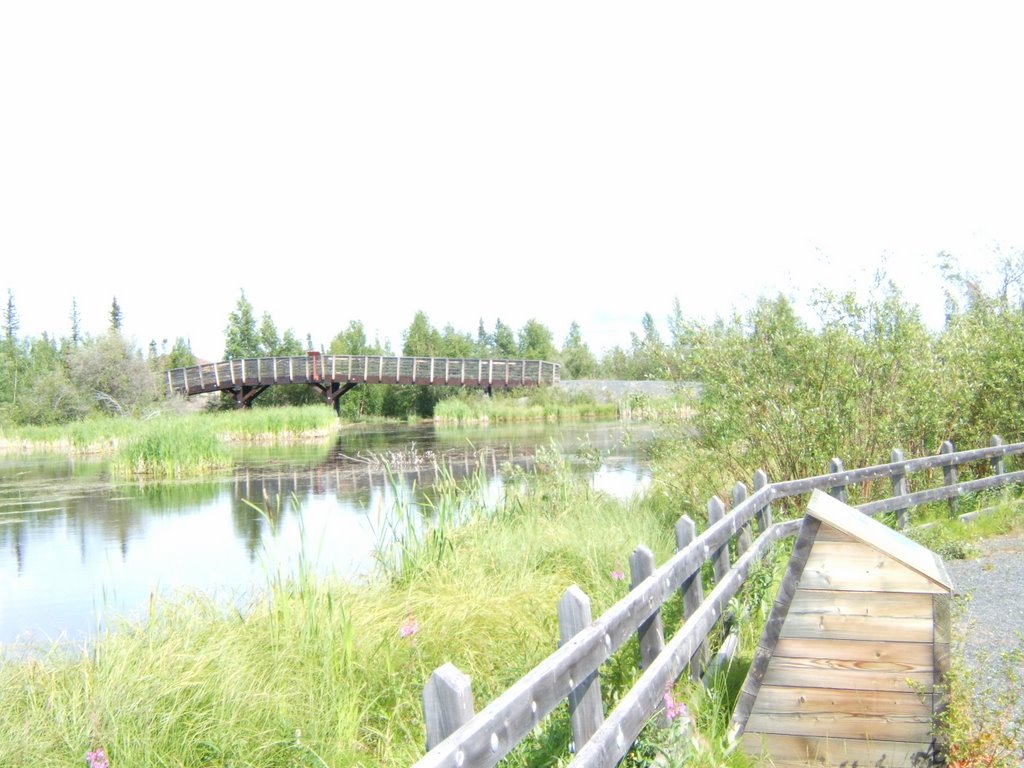
On Friday we went bird-watching at Niven Lake in the heart of Yellowknife. This urban lake used to be a sewage lagoon and is now a thriving wetland and is home to beaver, muskrat, and many species of birds and wild plants.

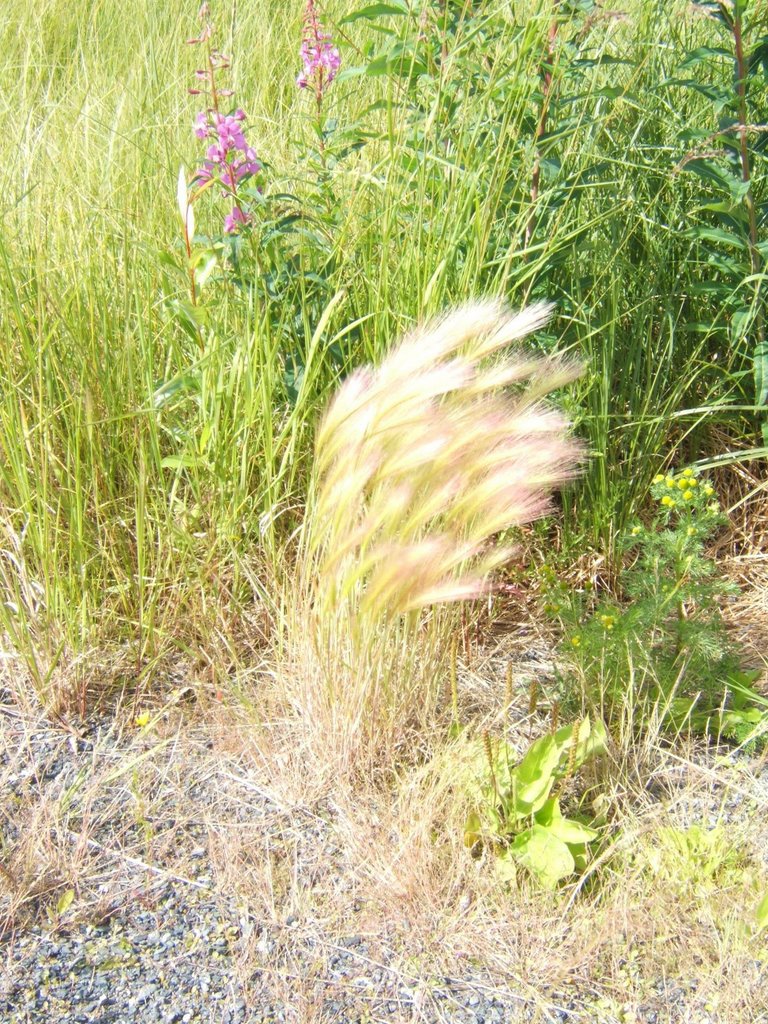
Pictured above (foreground) is foxtail barley The BC government lists it as a 'noxious weed'. I like to call it a 'native plant'. In the background, the red flower is fireweed.

Folk on the Rocks


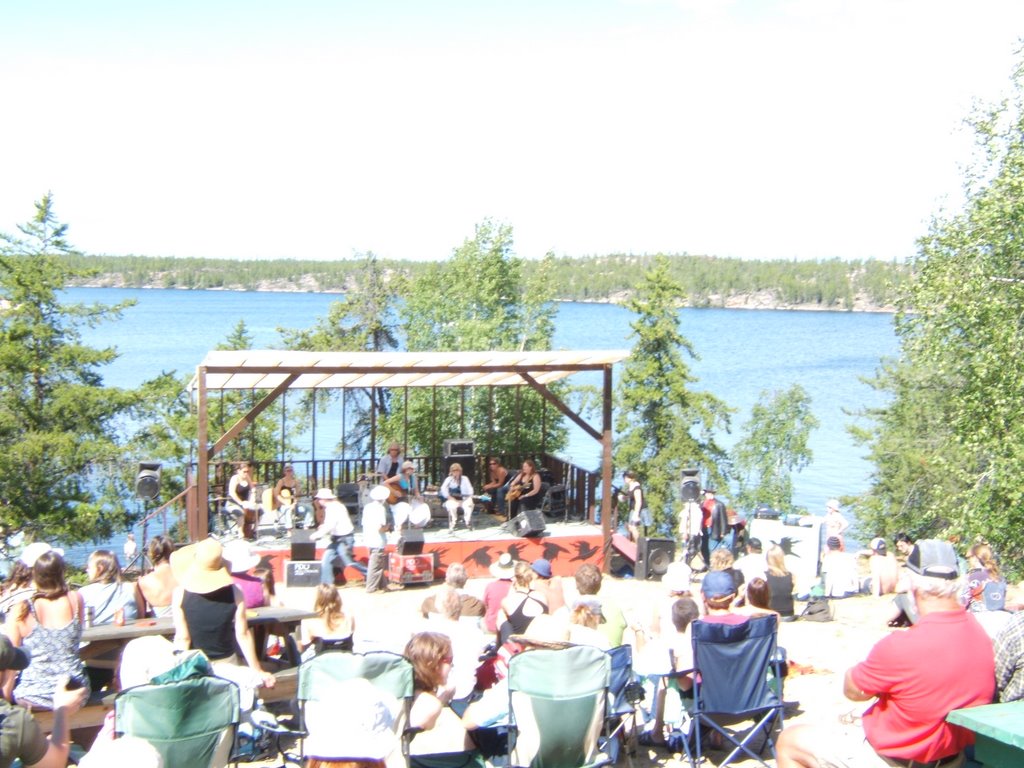
We had a fabulous day at Folk on the Rocks. Not only did we see some quality artists but the organizers put the artists together in mash-ups. Bands that don't normally play together were paired off on some of the smaller stages during the afternoon shows. Brodie Dawson, local Yelloknife artist was matched with two seperate Ontario bands: Serena Ryder and The Marigolds. Whitehorse musician Indio Saravanja was paired with Petunia, an artist from New Brunswick. The result was a happy mix of compatible but different artists - a sound that we would not otherwise get to hear.

The food today: caribou burger on re-usable camping plate. Instead of generating massive quantities of paper plates, the festival has a deposit/return system which allows you to borrow a plate for your meal. Sweet.

Friday, July 14, 2006

Giant Mine


The front page story of the Yellowknifer the day we arrived had a story about the threat posed by the Giant Mine.

The Giant Mine has been open since 1948 in Yellowknife and was a major employer for a long time. However, it seems that the mining companies who cashed in on the gold rush didn't take care of something. 237,000 tonnes of arsenic trioxide, to be precise. It's actually quite a common problem in resource based economies. Wealth gets privatized. Costs get socialized. Now the government is on the hook for a 200 million dollar cleanup while the former private sector managers are nowhere to be found. How can this be? I thought government was incompetent and the private sector efficient...

The latest problem making headlines is that a creek is threatening to flood the arsenic trioxide storage areas and spew deadly poison into Yellowknife Bay.

The US Center for Disease Control website lists the threat from ingested arsenic trioxide as "extremely hazardous. " Symptoms for poisoning include hemorrage, cerebral edema, and coma. The site indicates that 'small amounts of arsenic trioxide can lead to multiple organ damage and death' (source: CDC medical management guidelines )

In addition the EPA has classified arsenic trioxide as a human carcinogen: "Arsenic trioxide causes skin and lung cancer and may cause internal cancers such as liver, bladder, kidney, colon, and prostate cancers."

Sleep well kiddies.

Lite Ride


Yesterday was our first full day in Yellowknife, NT. We toured around on our new LiteRide folding bikes from goods-2-go. These Canadian-designed (alas not Canadian built) bikes weigh a mere 12.5 kg and they fold into a duffel bag. At the airport check-in, the large bags provoked suspicion and comments about 'not exactly travelling light are we?' but we were able to evade the usual $50 per bike handling fee that is normally charged. (Nothing suspicious here. Just two spouses and a whole lot of luggage. We definitely don't have any bikes or other luggage that would trigger extra fees. May I have my boarding pass please)

The bikes were invaluable yesterday; you get a huge amount of freedom when riding a bike that you don't otherwise. We were able to zip to the grocery store and tour different parts of the city without getting tired from walking or spending a fortune on cabs.

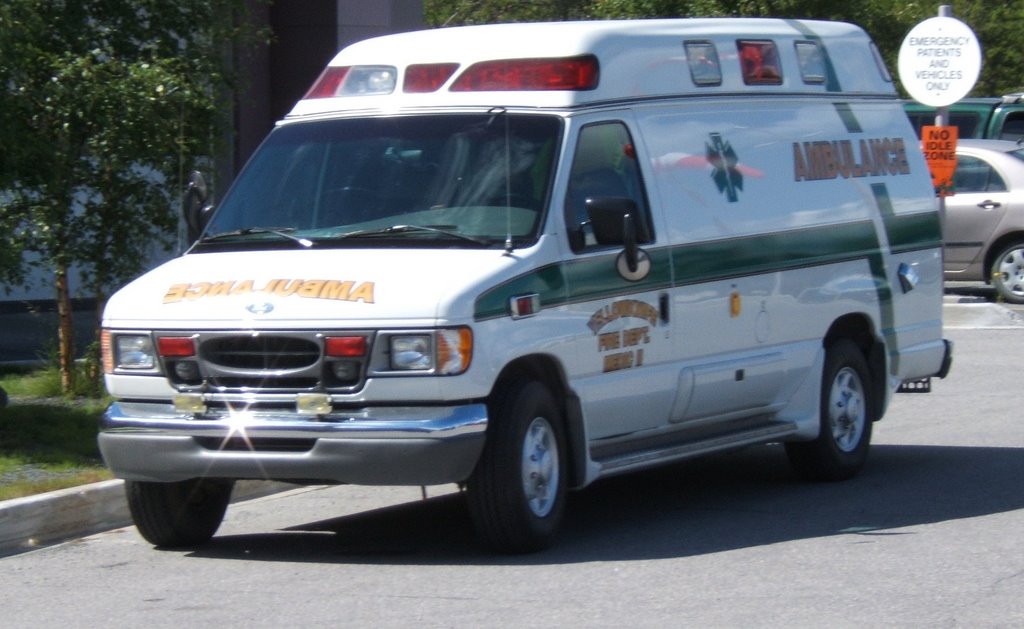
Sadly we saw a small boy who had just been hit by a car lying on the sidewalk. His BMX bike was under the wheels of a Jeep and he was surrounded by passers-by as the emergency services raced to the scene.

For lunch we rode our bikes to the Frame Lake Trail and sat on the rocks and ate bologna sandwiches and vegetables with hummus. It was a sunny day, and it was great.


Wednesday, July 12, 2006

YK


And we're off. Yellowknife, NWT here we come. Most people go south for the winter but we're going north for the summer.

Yellowknife has a friendly urban community with close proximity to the great outdoors. Folk on the Rocks is the biggest community event of the year, and we're looking forward to seeing the bands on the playlist.

Saturday, July 08, 2006

Snappo


Two visits to the ER in the past two months. Last month it was for a tetanus shot after I stepped on a rusty construction staple. Remember, get your tetanus shot if you are doing any renovation work.

On Tuesday I damaged my rotator cuff playing Ultimate. Made a fantastic flying catch and landed on my shoulder to hear a loud cr-ack. All of a sudden my joint was not in the right place, and so I floundered a little bit on the ground in shock.

The Ultimate crowd gathered around knowledgeably as I was squirming on the field. This injury happens a lot in this sport. They said "Hmmm, is your shoulder out? Yes, pretty common. Don't worry it will probably just slide back on its own."

And it did - oozing back into place as suddenly as it popped out.

Anyhow I don't recommend this particular injury. I visited our fine socialized medical system (my co-workers hate Medicare with a passion but it seems to work rather well) and got X-rayed after a reasonably short time. But it was rather unpleasant all in all. Not necessary painful, just an intense feeling of disbelief that you get when your body is mangled in some way. You look down at a limb that's always been a certain way but now it's not, and your mind does a double take, like "this is not really happening".

Monday, July 03, 2006

Joy on Canada Day


Portuguese fans go wild on Canada Day at a local pub as Portugal beats England in penalty kicks in a quarter-final match. You have to love a sport that can make large burly men embrace each other.

Soccer is the world's #1 sport in terms of popularity. Probably because you don't need a pile of expensive hockey or football gear to play it. And you can play it practically anywhere.

Sunday, June 25, 2006

Bullfrog Power


We're considering switching over to Bullfrog Power.

Bullfrog Power is one of Ontario's green electricity retailers. Their power is sourced from wind farms and low-impact hydroelectric. No physical change to your power supply is needed; you access power through the local electricity grid, but you get billed from Bullfrog instead of Toronto Hydro. It's a little more that you pay 9.1 c / kWh for power with Bullfrog. This is higher than the 5.8-6.1 c / kWh from Toronto hydro.

I like this new company but at the same time I'm a little frustrated by the implication that enviros should be paying double for their power. Sustainable development is not an obscure hobby or a luxury for righteous celebrities like Margaret Atwood. It's a huge problem that needs to be addressed through stronger mechanisms.

For example, let's take an analagous situation. Say we have a problem with stereos being stolen in our city. Let's say a lot of stereos are being stolen, and we want to fight this problem in some way. So, option A would be to solve it through economic choice. Call it the free market approach. We'd simply let people choose what kind of stereo to buy. According to economic theory, as long as there is enough demand for non-stolen stereos, the market will supply them. Under the free market approach, government will do nothing and it will get out of the way of the marketplace. Well, the only thing it might do is to facilitate things a little bit.. To help stereo purchasing do-gooders make choices, we might set up little government approved badges, that certify stereos as 'Certified Non-Stolen Stereo Equipment' or 'TheftStar' or something like that.

So what's the problem here? Why is this not a good solution? The do-gooders can buy their certified used stereos from the specialty shops, and other people can buy the cheap stereos from the shady pawn shops. Everybody's happy because they made their choice right?

Well, there are two problems with that solution. First of all, this is actually a very weak and ineffective way of addressing the problem. There is no economic incentive to buy non-stolen property. Stolen property will generally be cheaper because it is stolen property. That's why it's cheap! So if you want to actually reduce stealing, you need something a little more nippy than making sure that the choice of non-stolen things is available. You need a more effective way of dealing with it other than persuasion and market choice and certifications and badges.

The second problem with the market mechanism solution, is that well, bluntly put, stealing stereos is wrong. People who deliberately buy stolen stereos are assholes. Why should my neighbor have the right to buy things that were taken by a thief from my house?

The good news is that we've actually addressed the problem of stolen stereos in a rather effective way in the past. We call this the government regulation approach. We simply define the purchase of stolen stereos as an unacceptable market choice. You want to buy some stolen stereos? Too bad. You don't have the right to buy stolen stereos.

And it turns out that it actually is not too hard to prevent people from buying stolen stereos. And it actually doesn't involve a huge cost or a lot of heavy handed intrusion by government into the average person's life, because it mainly involves regulating people who are in the stereo business. The police visit pawn shops which sell stolen stereos and if they find any stolen stereos, they simply take them away and give them back to their owners. The people who make their living supplying pawn shops with stolen stereos sooner or later get arrested and they are prevented from conducting their business.

So basically that's what I don't like about Bullfrog Power. As a temporary solution, a way to promote sustainable development, yippee it's great. I will happily jump on the bandwagon.

But as a long term solution it's a bad idea, because it's inffective. Most people don't know about Bullfrog, and if they do know about it they may not pay extra for it, because there is no economic incentive. And because it's a moral issue. Pollution affects everybody; we need a more effective solution than some people paying double the price for power, and most people blasting their A/C and paying the subsidized rate for power.
Saturday morning, 8AM


Wow, I don't usually get up at the crack of 7 on a Saturday (or any other day) but there I was on Saturday morning in the garden. There's a whole different world out there on an early weekday morning. The city is much less crowded, and the streets very quiet.

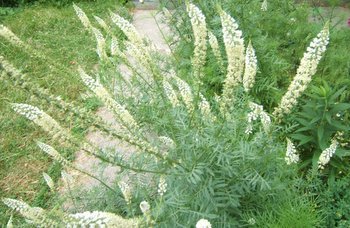
I was trying to figure out what this plant is in our garden. It is most likely astilbe (false spirea). We tried to plant astilbes this year but the seeds didn't sprout, so we dumped the seeds earth in this location, and this new plant has sprouted from the same location.

Friday, June 23, 2006

Dundas & Manning


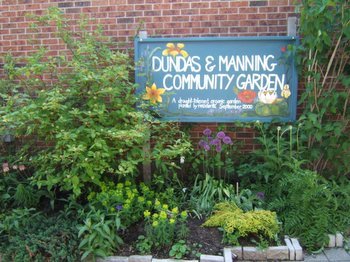
This mini flower garden is around the corner from the 7-11 on Dundas Ave. The sign identifies the garden as a drought-resistant garden planted in September 2000, and it is doing quite well. I am not sure who maintains it, if anyone.

The city has a program to encourage community gardening. Also, FoodShare has a manual for people who want to start community gardens.

Friday, June 16, 2006

Carbon tax

Canada's first carbon tax was announced today. Finally, a politician with some backbone on climate change. Quebec gets it. Stephen Harper doesn't. The only way to rejig the economy to a more sustainable footing is to tax activities that are harming the planet, and funnel the money to activities that are sustainable.

Wednesday, June 14, 2006

Park Day, June 4


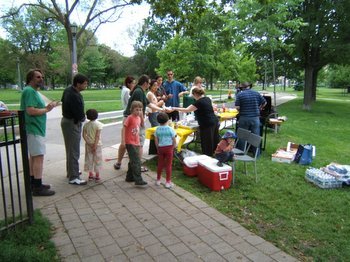
We spent an enjoyable Sunday afternoon in the park. The Friends of Trinity Bellwoods Park held a fundraiser and planting day. Brought tools. Planted annuals around stick like trees. Ate hot dogs. Made donation. Met neighbors.

Truth told, I am more interested in naturalized spaces, not Victorian parks. The north end of this park has some areas that would be suitable for naturalization. Maybe I will sneak in there in the middle of the night and plant something indigenous and rampant...

Sunday, June 11, 2006

Another green feature at MEC


Here's another feature of MEC Toronto's green building. No unnecessary use of material. The store is a no-frills space, without the usual drywall or (ugly) ceiling tiles. You can see the metal frame of the building.